
August 5, 2026, 08:57
How Close Up knocked out bad breath in Nigeria and cut its cost per click by 90%
Sam Chambers
 Add Webfluential as a preferred source
A Webfluential case study with Unilever's Close Up, Nigeria, 2024
At a glance
Three phases. Twenty creator activations across nano, micro and macro tiers. More than 31.8 million impressions, 1.3 million link clicks and 7.8 million organic video views, with engagement rates between 5.2% and 7.3% and a cost per click that fell from $0.048 in phase 1 to $0.005 by phase 2.
The challenge
Freshness is the biggest driver of toothpaste purchase, and almost every toothpaste brand promises fresh breath. Consumers believe mint equals freshness, but mint is a temporary feeling. Close Up's real difference sits in its Antibacterial Zinc technology, the ingredient proven to fight the bacteria that actually cause bad breath.
Close Up was already a market leader in Nigerian oral care, but Unilever saw room to grow penetration by making that science famous. The brief to Webfluential was a single-minded one:
The task: turn a functional ingredient story into content young Nigerians would actually watch, share and act on, then convert that attention into trial and purchase.
The strategy
Rather than one big burst, the campaign was built as three phases, each with its own job: make the technology famous, then send an educated audience somewhere they could buy.
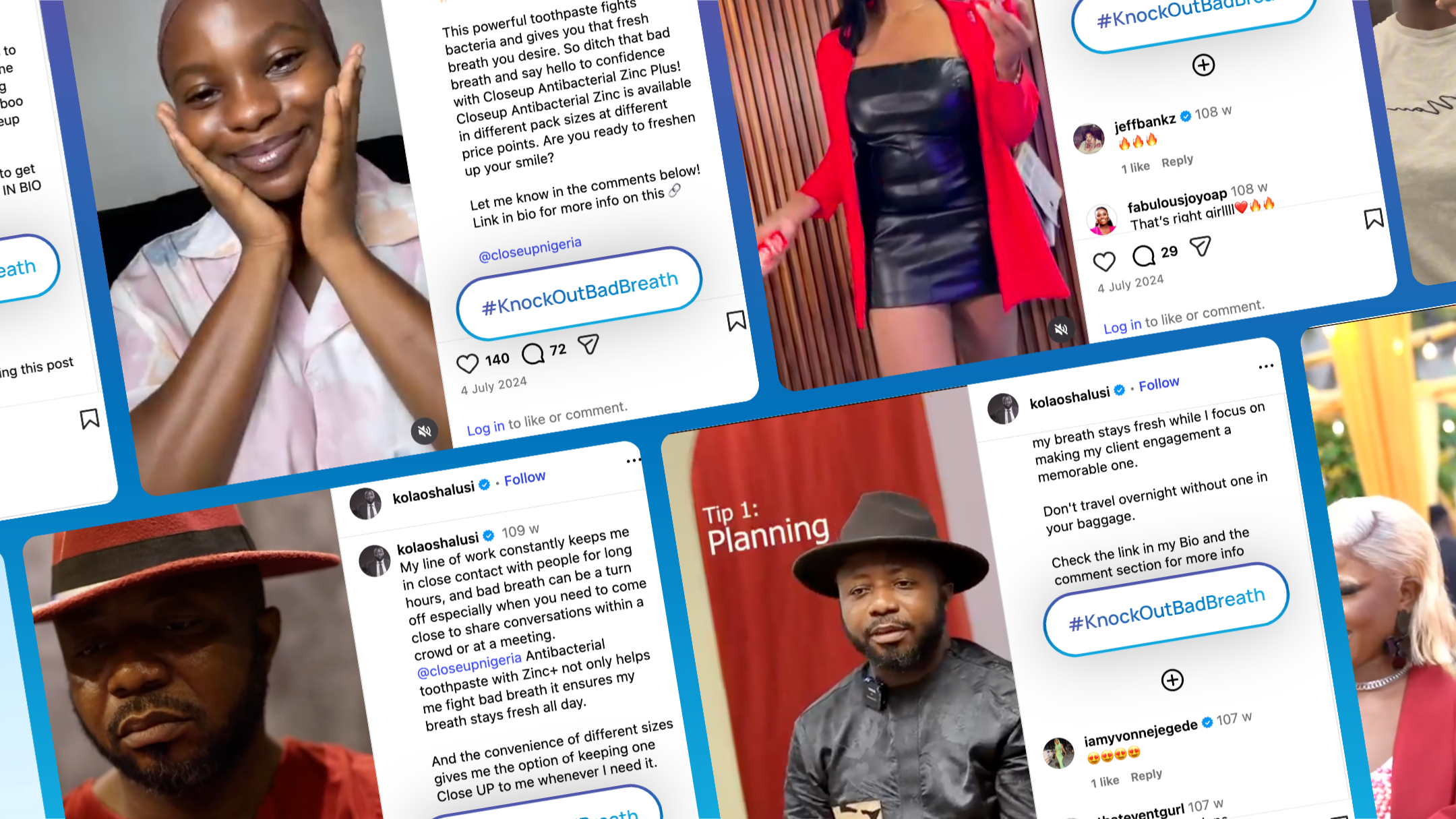
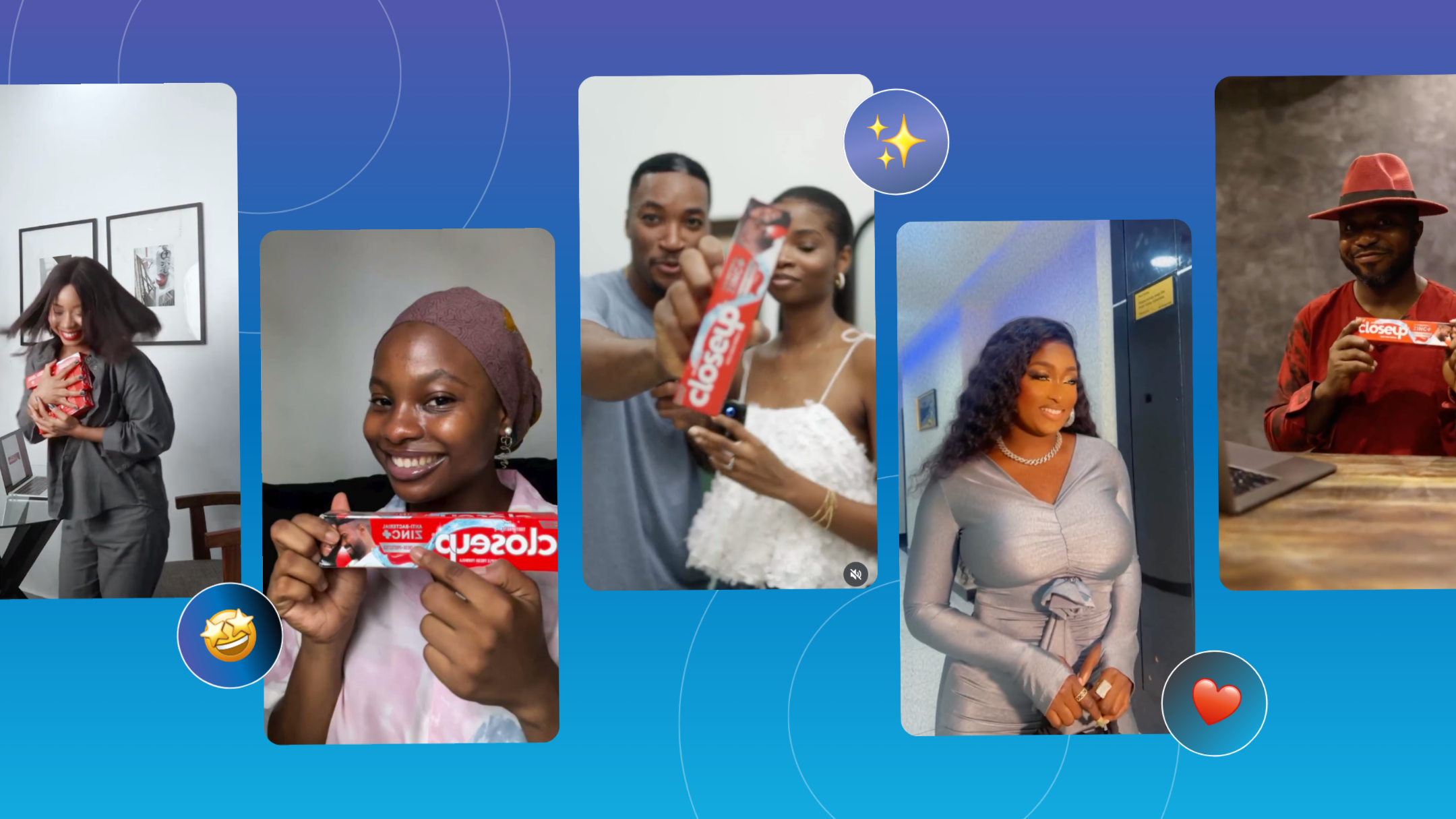
The creator mix did the heavy lifting: Humorous creators turned oral hygiene into skits. Lifestyle creators built Close Up into morning routines and smile transformations. A dental expert anchored the science with educational reviews. Nano influencers, matched from the database by persona, added trusted everyday recommendations, while micro and macro creators delivered reach and recognisability.
Every piece of organic content that worked hardest was then amplified through performance media on Facebook and Instagram, targeted at 18 to 65 year olds across Nigeria with focus on Lagos, Abuja and Port Harcourt. Fresh creator content was rotated into the ad sets each month to avoid fatigue.
Phase 1: making Antibacterial Zinc famous
The awareness phase ran from 20 June to 20 July 2024, with eight creators producing 17 pieces of video content.
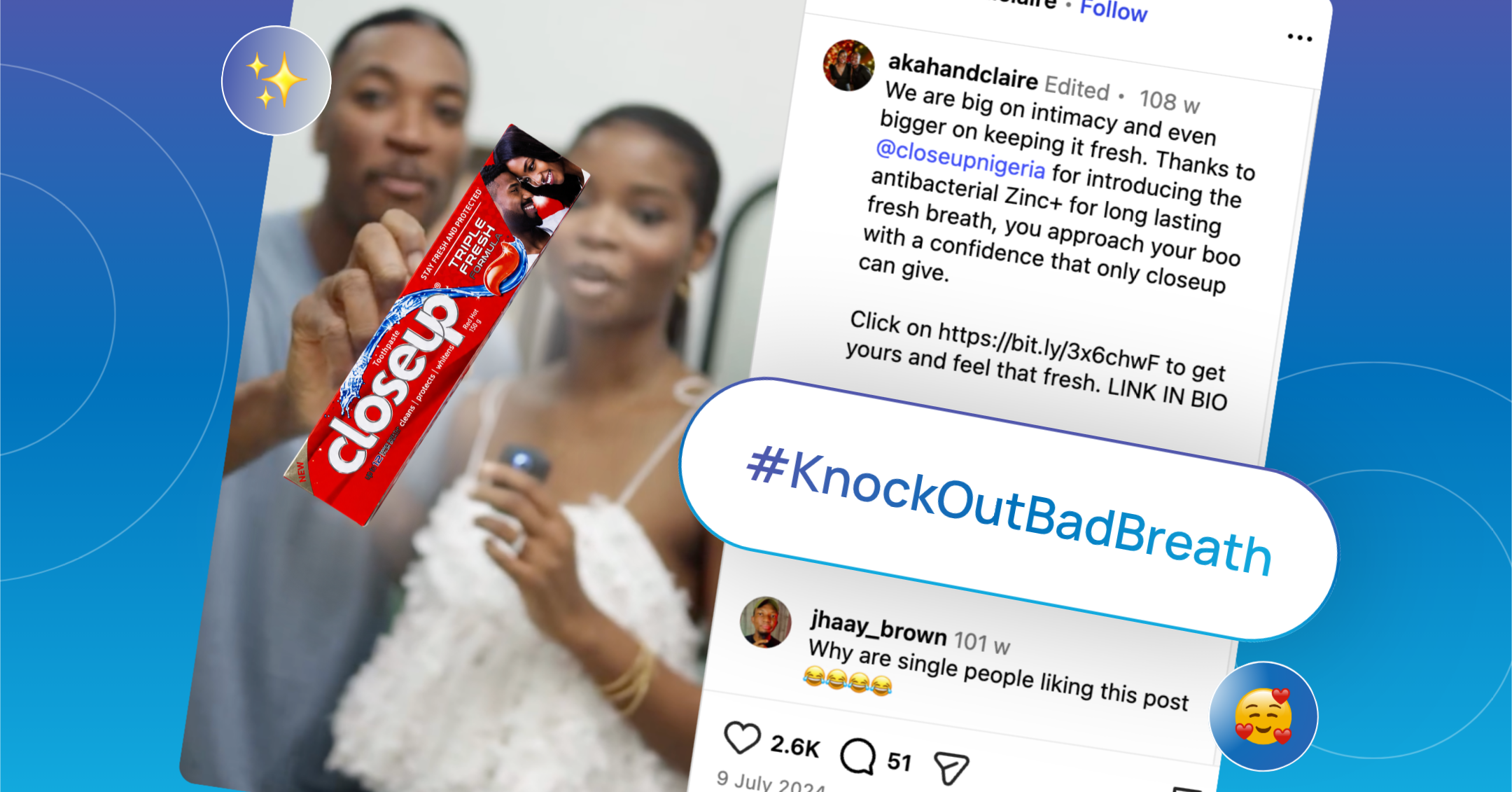
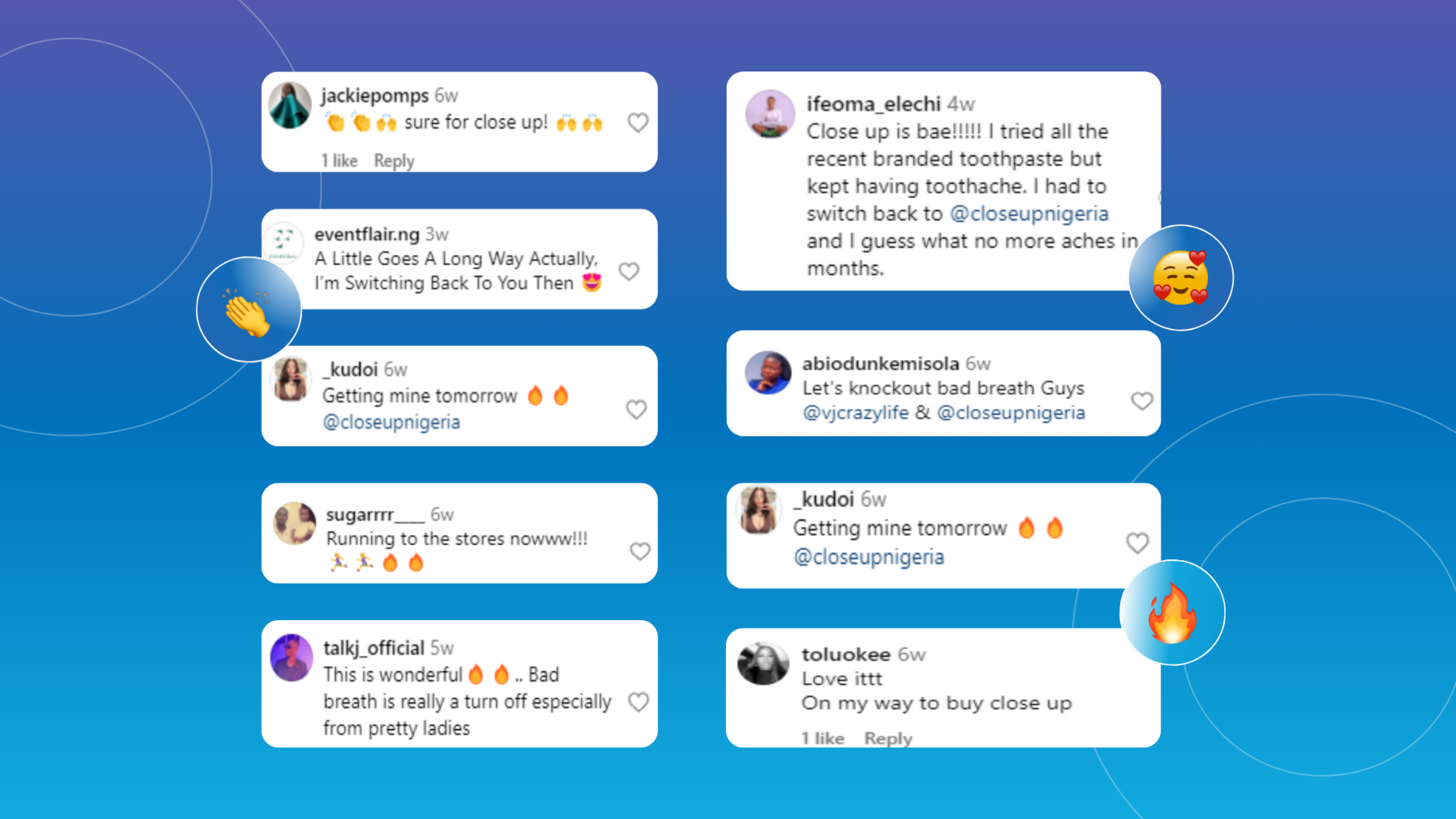
The organic work alone delivered 763 000+ video views at an average engagement rate of 5.2%. Lifestyle creator Mo Sieta reached a 20% engagement rate on her top post, with 254 000 video views, and comedy duo Akah and Claire became the campaign's amplification engine, driving 7.6 million impressions and 27 000 link clicks once promoted.
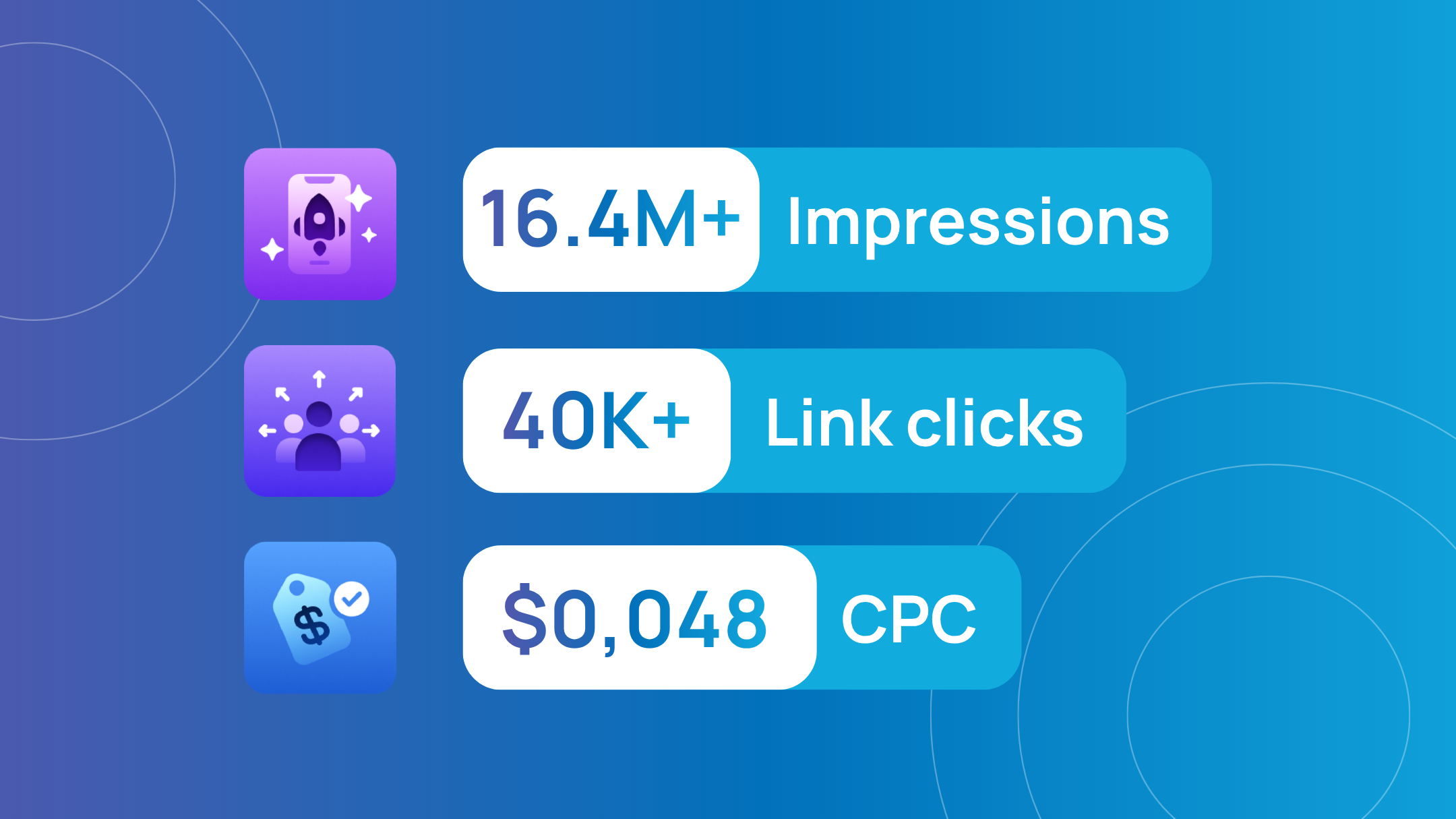
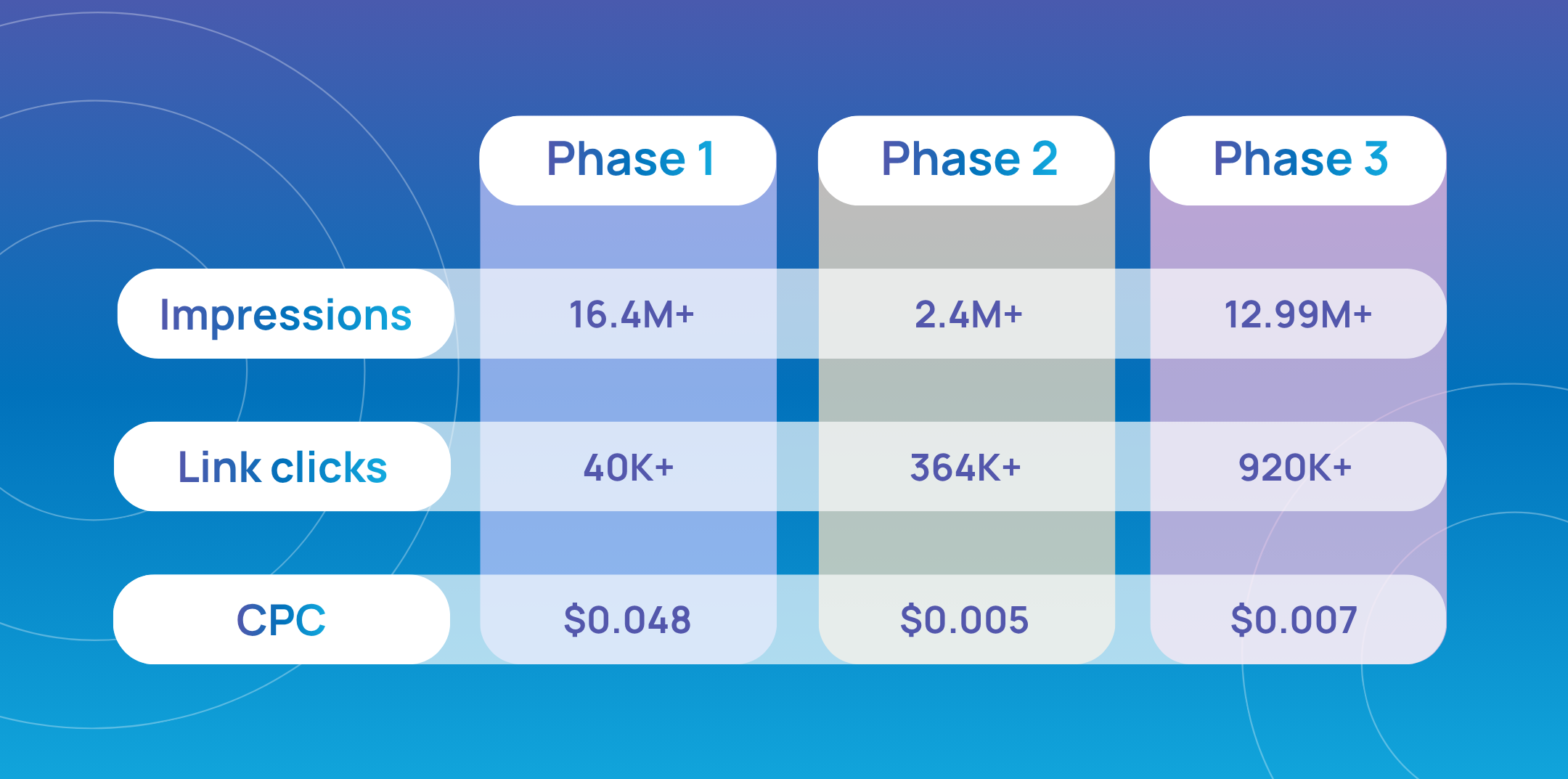
By the end of phase 1 the campaign had delivered 16.4 million impressions and 40 000+ link clicks at a $0.05 cost per click and a $0.11 CPM. Sentiment tracking showed the conversation around the brand was overwhelmingly positive.
Phases 2 and 3: from awareness to action
With the technology story landed, the second and third phases changed the objective from awareness to traffic. Creators kept educating on Antibacterial Zinc but added a second message, affordability across pack sizes, and every post now pushed to Close Up's product page on Jumia to drive trial and purchase.
This is where the phased approach paid off. Because the audience had already been warmed up and the creative had a month of learnings behind it, costs collapsed. Phase 2 delivered 364 200 link clicks at a $0.005 cost per click. Phase 3 scaled that to 12.9 million impressions and 920 900 link clicks at $0.007. Against phase 1's $0.048, the campaign was now buying clicks at roughly a tenth of the original cost.
The organic content got stronger too. Across the twelve activations in phases 2 and 3, engagement averaged 7.3%, with creator Omosebi hitting 13.5% and micro creator Neo pulling 127 000 views on a single post. In phase 3 the campaign leaned into bigger reach, and Mavis Anthony's post alone was watched 2.4 million times.
The results
Across all three phases the campaign delivered more than 31.8 million impressions, 1.3 million clicks through to Close Up content and its Jumia product page, and 7.8 million organic video views from 20 creator activations. Audience data confirmed the campaign found exactly who it was built for: 18 to 34 year olds accounted for the majority of impressions and clicks throughout, and by phases 2 and 3 women made up over half the engaged audience.
A partnership, not a transaction
The relationship did not end with the last post. When Unilever's president for its markets group visited Nigeria in February, campaign creators were invited to an exclusive lunch session to share, candidly, what makes content engaging in Nigeria, what makes brand partnerships work and how success should really be measured.
That is what a mature creator programme looks like: creators treated as strategic partners whose insight shapes the brand's next move, not just its last one.
Ready to build your own creator growth engine?
Webfluential runs fully managed influencer campaigns across Africa and the world, from creative briefing and creator selection through content approvals, delivery, payments and live reporting you can check at any time.
Join Webfluential and start growing your business: https://webfluential.com
Join Webfluential and start growing your business
From micro enterprises to Fortune 500 companies, brands from over 130 countries have booked influencers on Webfluential.
Talk to our team