
October 15, 2026, 09:36
How a leading retailer made men’s grooming a conversation, and beat every commercial target it was set
Sam Chambers
 Add Webfluential as a preferred source
At a glance
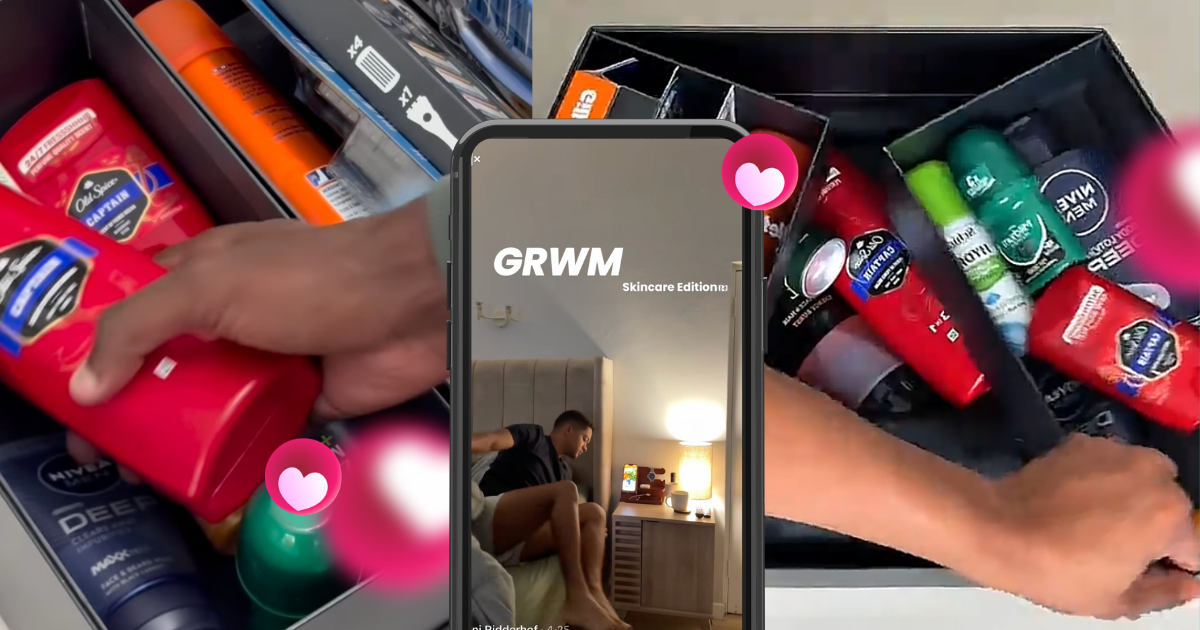
Webfluential South Africa facilitated a men’s grooming campaign for a leading national health and beauty retailer across Instagram and TikTok, built on the connection between grooming, confidence and self-expression. Micro and consumer creators shared authentic content around a “first touch” theme, with each creator receiving a curated box of featured grooming products from participating brands.
Every commercial metric beat its contracted target. Link clicks came in 406% above goal. Blended cost per click landed 80% below goal. Meta link click-through rate ran at roughly 2.7 times the retail benchmark. Content and creator volumes were delivered in full, and the campaign closed with zero budget variance.
The challenge
Men’s grooming is a category with a talking problem. The products sell, but the conversation around them is quiet, and in South Africa it has historically been coded as something men do privately and do not discuss. The retailer had range, promotional offers and participating brands ready to go. What it did not have was a reason for men to talk about any of it in public.
The brief to Webfluential was awareness and traffic: drive consideration for featured grooming products and promotional offers available in-store and online, and get people to click through. The harder unstated job was permission. A man is far more likely to try a face wash because someone he already follows showed him theirs than because a retailer told him to.
The strategy: routines, not product demos
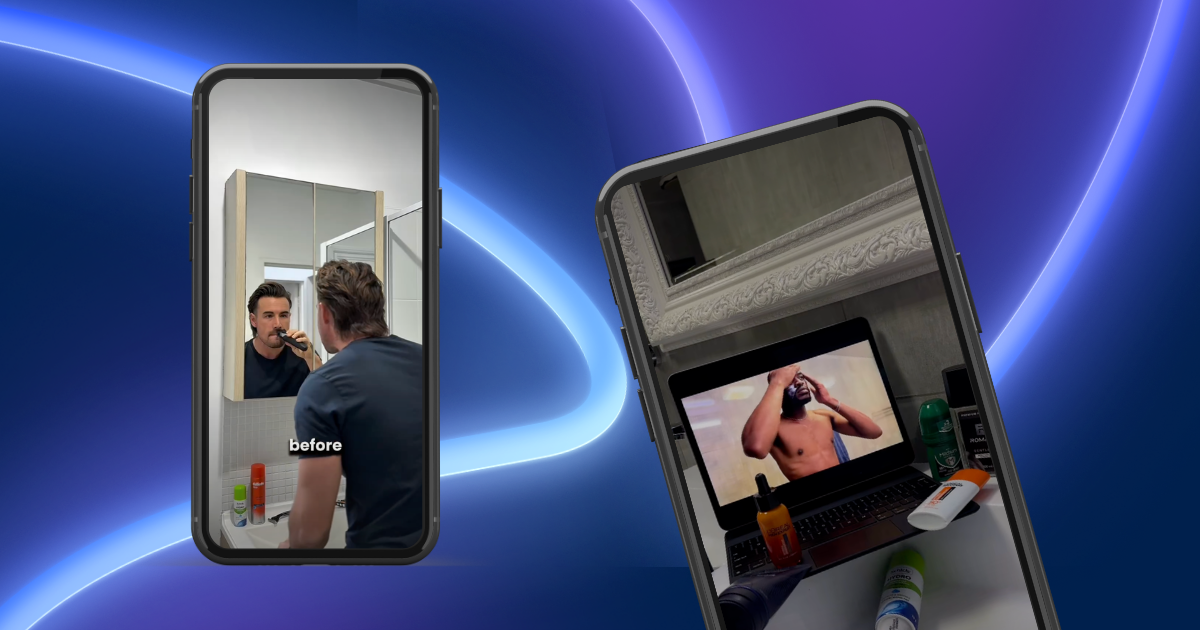
Rather than briefing product features, Webfluential briefed the "first touch" theme: the moment before you walk into a room, a date, a derby, an interview. Creators built content around real grooming routines, confidence-building moments and personal stories, with the products integrated naturally into what they were already doing.
The roster was deliberately split across two jobs.
Micro creators carried craft and reach
Established lifestyle and sports-culture creators produced the more polished, higher-production content. Their posts anchored the campaign's visibility and gave the paid layer well-made assets to amplify.
Consumer creators carried credibility
A second tier of everyday consumer creators produced content that looked like what it was: a real person, a real bathroom, a real product. This tier produced the campaign's single highest engagement rate, and it did so on the least polished content in the set.
What the content did
The engagement pattern was the clearest strategic signal in the campaign. Content that led with storytelling out-performed content that led with product, consistently, across both tiers and both platforms.
Audiences responded most strongly to authentic grooming and self-care routines, personal stories tied to confidence and first impressions, natural product integration inside everyday content, and lifestyle-led framing that put narrative ahead of sales messaging.
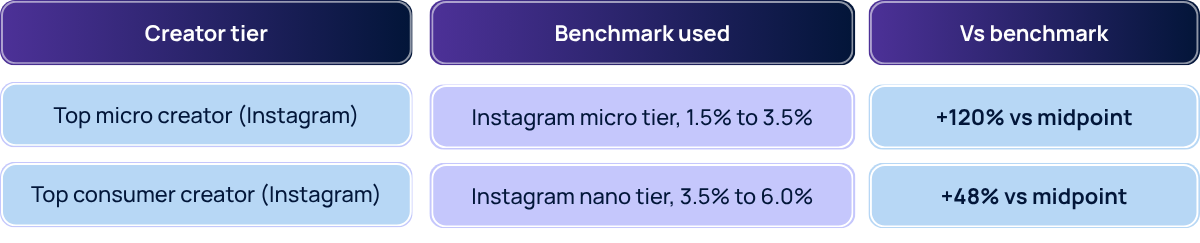
Measured against published 2026 engagement rate benchmarks for their follower tiers, the top performers cleared the bar comfortably:
What the audience said
Sentiment was overwhelmingly positive, with minimal to no negativity across the campaign. More usefully, the comments showed the category permission the brief was actually chasing. Men were not just approving of the content, they were declaring intent in public.
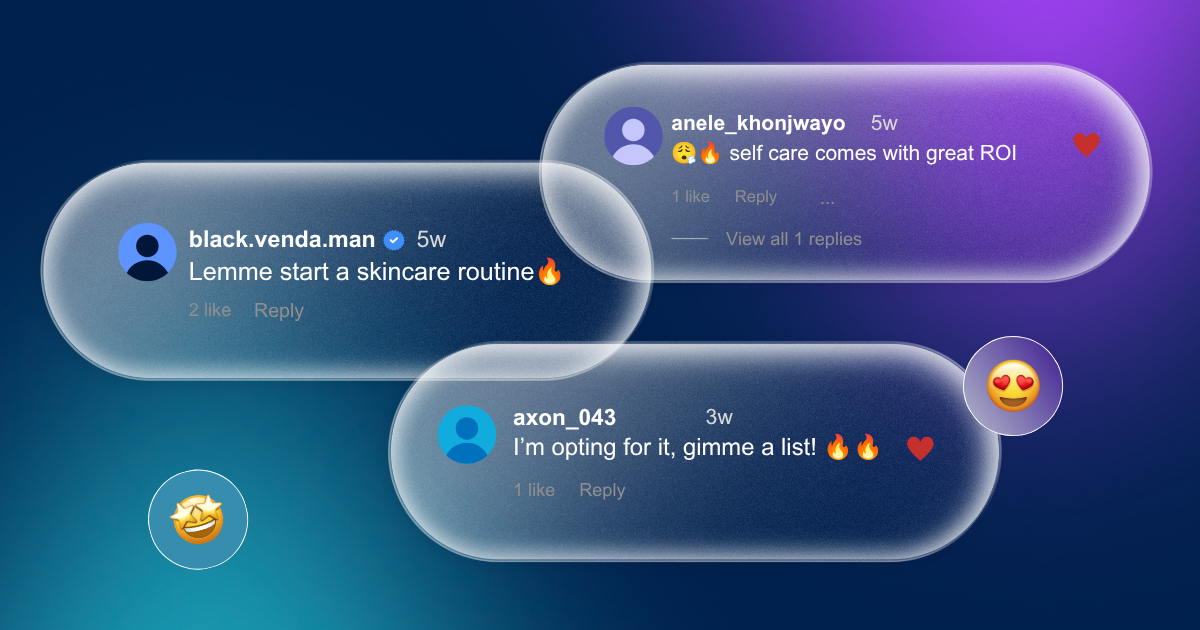
The recurring themes were approval of men’s grooming and self-care, excitement around the campaign’s brotherhood framing, compliments on presentation and grooming, product shoutouts with stated intent to try, and a light-hearted brotherhood tone that made the whole thing feel like a group activity rather than an advert.
What we learned
Unpolished beats produced in a trust category
The highest engagement rate in the campaign came from a consumer creator holding a product in a bathroom, not from the best-produced asset in the set. Where the purchase decision rests on whether a real person actually uses the thing, production value is not the variable that moves it.
Cost efficiency at this scale is a creative outcome, not a media one
An 80% reduction against a cost per click target is not something media buying alone produces. It happens when the creative is genuinely wanted by the audience it is served to, which lowers the price of every click that follows.
Reach is the start of the measurement, not the end
Beating a click target by more than five times is a strong result and an incomplete one. The next step is connecting this activity to basket data and in-store redemption, so the campaign can be judged on sales rather than on traffic.
Webfluential runs fully managed influencer campaigns across Africa and the world, from creative briefing and creator selection through content approvals, delivery, payments and live reporting you can check at any time.
Join Webfluential and start growing your business: webfluential.com
Join Webfluential and start growing your business
From micro enterprises to Fortune 500 companies, brands from over 130 countries have booked influencers on Webfluential.
Talk to our team