
March 16, 2026, 15:20
YouTube’s explosive growth in Sub-Saharan Africa signals a golden age for influencer marketing

Murray Legg
 Add Webfluential as a preferred source
With 35 million mobile users in Nigeria alone, a connected TV revolution reshaping living rooms, and Gen Z audiences unreachable on any other platform, the opportunity for brands partnering with YouTube creators across Africa has never been larger - or more urgent.
Johannesburg, 16 March 2026 - New data presented by Google paints a striking picture of a continent in the grip of a digital content revolution. YouTube’s reach across Sub-Saharan Africa (SSA) has hit record levels, creator ecosystems are maturing at pace, and a generation of young Africans are building careers, communities, and cultural movements through the platform.
For brands and agencies, the implications are profound. In a presentation delivered by Google’s YouTube Social Stars team - including Lisa Singh (Google Customer Solutions, Social Lead for SSA), Ralph Aidoo (YouTube Partnerships, SSA), and Eniola Adeogba (Creator Product Activation Lead, YouTube EMEA) - laid bare the scale of the opportunity, the unique audience dynamics, and the advertising products now available to connect brands with Africa’s most influential voices.
For Webfluential, Africa’s leading influencer marketing platform with a network of over 660,000 vetted creators reaching a global audience of 2.7 billion, these findings confirm what the company has been building towards for more than a decade: the African creator economy is no longer an emerging trend. It is the marketing frontier.
The numbers: explosive regional scale
YouTube’s footprint across SSA’s three largest digital markets is formidable. As of September 2025, the platform’s mobile reach among adults aged 18 and over stands at 35 million in Nigeria, 25 million in South Africa, and 12 million in Kenya. Connected TV (CTV) reach adds a further 3 million in Nigeria, 8 million in South Africa, and 3.5 million in Kenya.
Year-on-year watch time growth tells an even more compelling story: Nigeria is up 15%, South Africa 20%, and Kenya a remarkable 30%. These gains represent a fundamental shift in how hundreds of millions of Africans consume media, discover products, and make purchasing decisions.
To put this in context, Africa’s creator economy was valued at $3.08 billion in 2023 and is projected to reach $17.8 billion by 2030, growing at 28.5% annually. Globally, influencer marketing has surpassed $30 billion. The continent is no longer a footnote in these figures - it is increasingly the headline.
Two engines of growth: the pocket and the living room
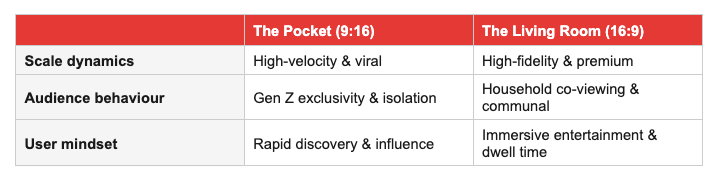
Google framed YouTube’s SSA strategy around two complementary “engines” that together deliver what the company calls “total ecosystem capture.”
Engine 1: YouTube Shorts and the Gen Z epicentre. YouTube Shorts is positioned as the primary cultural operating system for Gen Z (ages 18–27) across SSA. The vertical screen is where trends are born, accelerated, and consumed at scale. Among Gen Z Shorts users, 52% do not use Instagram Reels and 22% are not on TikTok at all. This makes YouTube Shorts the only platform capable of reaching these audiences - a fact with enormous implications for brands that have historically concentrated short-form budgets on competing platforms.
Engine 2: The “big screen” revolution. SSA is experiencing a foundational hardware shift. Audiences are migrating watch time from personal devices to connected TVs, transforming YouTube from a mobile-first platform into a living room staple. CTV ad revenues on YouTube are forecast to reach $4.47 billion globally in 2026, up from $4.01 billion in 2025. In South Africa, the CTV tipping point is approaching, with cheaper connected devices and expanding broadband driving rapid adoption. For advertisers, the living room screen brings high-fidelity, premium, communal viewing - a fundamentally different context from the rapid-fire discovery of Shorts.
The power of YouTube creators: attention, relevance, and trust
Google’s presentation introduced the A.R.T. framework to explain why YouTube creators are uniquely effective marketing partners.
Attention. YouTube creators express brand stories across both short and long form. Seventy per cent of YouTube creators post in both formats, and there are now more than 3 million creators in the YouTube Partner Programme globally. The creative freedom of the platform cuts through the clutter in ways that polished brand advertising often cannot.
Relevance. Ninety-two per cent of users agree that YouTube has content relevant to their needs, outperforming the social media average according to Kantar research. YouTube is also the number one platform that people around the world say they would miss the most if it disappeared. Communities of passionate fans allow brands to connect with audiences’ true needs and desires in a way that broad-reach advertising cannot replicate.
Trust. Viewers are 98% more likely to trust recommendations from YouTube creators compared to those on other social platforms, according to Ipsos. And 92% of YouTube viewers agree that creators help them make quicker purchase decisions (Kantar). This is not passive consumption - it is active, trust-driven commerce.
Africa’s creator landscape: from sport to podcasts
The presentation spotlighted the diversity of SSA’s top YouTube creators, with particular strength in sport (Cricket South Africa, Epic Series, iDiski TV) and podcasts (Upsyd Network, Phil Director, I Said What I Said Podcast). This breadth matters for brands: it means there are established, trusted voices across virtually every content vertical relevant to African consumers.
The broader creator ecosystem is equally striking. Nearly half of African YouTube creators now identify as full-time professionals, and roughly a quarter employ staff for production or channel management. Content creation is transitioning from a side hustle into a small business sector, creating employment and economic opportunity across the continent.
Female creators are leading much of this growth. Africa’s creator demographic skews young, with 51.3% aged 18–24 and 45.6% aged 25–34, and women are at the forefront of building audiences and driving commerce.
Case studies: what success looks like
#MadeInMzansi - YouTube Shorts ignite cultural pride at scale
One of the most compelling demonstrations of YouTube’s power in SSA is the #MadeInMzansi campaign in South Africa. Influencers drove awareness through YouTube Shorts celebrating local culture, generating over 3,000 short-form videos in the first phase alone. In the second phase, creators partnered to inspire others, resulting in more than 65,000 pieces of new content, 85 million views, and one million new daily users across Africa. The campaign’s success was rooted in cultural localisation - content was created in isiXhosa, Zulu, Afrikaans, and English, demonstrating that authentic, language-specific creator content dramatically outperforms generic approaches.
#YouTubeMadeForYou - multilingual creator campaigns in Nigeria
In Nigeria, the #YouTubeMadeForYou campaign took localisation further, producing creator content in Hausa, Yoruba, Pidgin, Igbo, and English. This multilingual approach reflects a growing understanding that Africa’s linguistic diversity is not a barrier but a creative advantage - creators who speak their community’s language build deeper trust and drive stronger engagement than those producing content only in English.
The rise of niche creators: lessons from “The Ghanaian Vegan”
Micro and nano influencers are proving particularly effective in African markets. Zuu, known as The Ghanaian Vegan, maintains a relatively small subscriber base across platforms but remains a popular source of vegan-related content, with a heavy emphasis on short-form video. The lesson for brands is clear: in Africa’s diverse markets, reach alone is not the metric that matters. Niche creators with deep community ties often drive more meaningful engagement and conversion than those with larger but less engaged followings.
What this means for brands and agencies
The data presented by Google points to several strategic imperatives for brands looking to win in SSA:
- Invest in YouTube Shorts for Gen Z reach. With over half of Gen Z Shorts users absent from Reels and nearly a quarter not on TikTok, YouTube Shorts is the only path to a significant and growing audience segment.
- Prepare for the CTV shift. Connected TV is transforming YouTube from a personal screen to a household one. Brands that develop creative strategies for the living room - longer formats, higher production values, communal viewing contexts - will gain first-mover advantage.
- Localise, localise, localise. The #MadeInMzansi and #YouTubeMadeForYou campaigns demonstrate that multilingual, culturally specific creator content dramatically outperforms one-size-fits-all approaches. Africa’s linguistic and cultural diversity is a creative asset, not a logistical headache.
- Embrace micro and niche creators. In SSA’s diverse markets, smaller creators with deep community ties often deliver higher engagement and conversion than those with massive but less targeted followings.
- Use Partnership Ads to scale what works. The integration of creator content into Google’s advertising ecosystem means brands can now amplify authentic influencer content to reach audiences far beyond organic followings, with full performance measurement.
The bigger picture: Africa’s demographic dividend meets the creator economy
Africa is the fastest-growing region in terms of working-age population. By 2050, over 740 million Africans will be of working age, with 12 million young people entering the labour force annually. At the same time, internet penetration and smartphone adoption are climbing steadily, creating conditions for the creator economy to scale in ways without precedent in other regions.
Over 60% of Africa’s population is under 25. This is the most digitally native generation the continent has ever produced, and YouTube is their platform of choice. For brands that understand this, the opportunity is not just about marketing - it is about building relationships with the consumers who will define African commerce for the next three decades.
Africa’s creator economy has already attracted global attention. In 2025, Sub-Saharan African creators were featured on TikTok’s Discover List for the first time, gaining international media coverage and invitations to events such as the Cannes Lions International Festival of Creativity. In 2026, five more African creators were named among the world’s 50 most influential digital voices. The world is watching. The question for brands is whether they are ready to act.
About Webfluential
Webfluential is Africa’s leading influencer marketing technology company, connecting brands with a network of over 660,000 vetted creators reaching a global audience of 2.7 billion. Founded in 2013 and headquartered in Johannesburg, Webfluential provides both fully managed, agency-style services for large brands and self-service SaaS tools for smaller businesses.
The Webfluential platform includes direct-to-audience sales for creators, a stock content marketplace, lead generation tools, and AI-powered insights for campaign optimisation. Webfluential’s mission is to create 1,000 creator millionaires by 2028 and to become the number one influencer marketing specialist across Africa, helping the continent’s billion people participate in the economy of producing content and earning a living.
For more information, visit webfluential.com.
Join Webfluential and start growing your business
From micro enterprises to Fortune 500 companies, brands from over 130 countries have booked influencers on Webfluential.
Talk to our team