
July 13, 2026, 08:15
“Made with AI” is not the problem. Low-effort content is.

Justine Wheeler
 Add Webfluential as a preferred source
Why audiences are engaging less with AI-labelled posts and how brands and creators can use AI without losing the stamp of authenticity.
AI has made content creation faster, cheaper and more accessible than ever. A campaign concept that once needed a full creative team can now be visualised in minutes. A creator can brainstorm hooks, draft captions, edit short-form video, test formats and package ideas at a pace that would have been impossible just a few years ago.
But there is a catch.
Audiences are not just responding to what content looks like. They are responding to what they believe went into it.
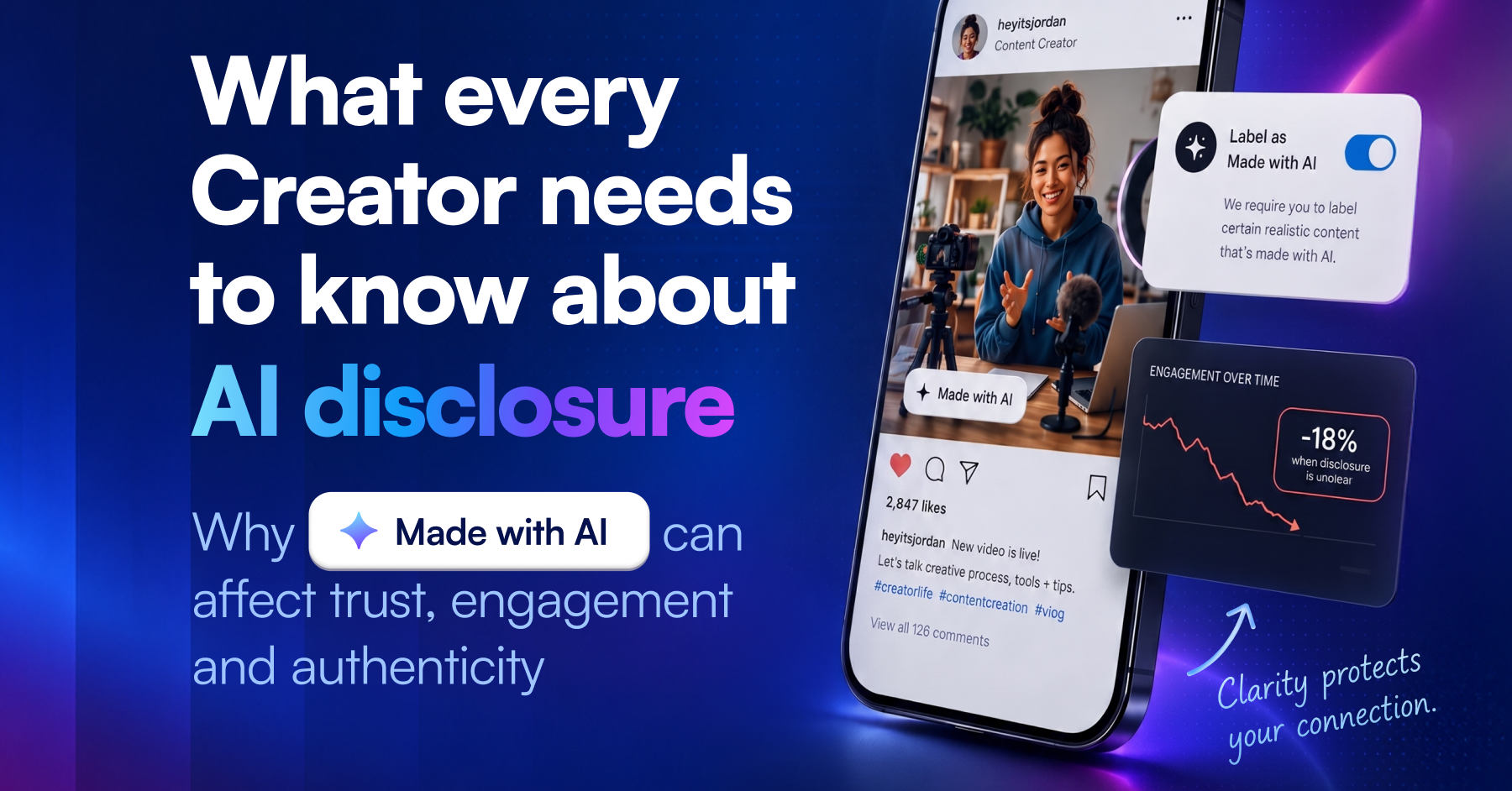
Recent research summarised by Science Says found that posts labelled as AI-generated tend to receive lower engagement because audiences feel less connected to the creator behind the content. The issue is not always quality. In fact, the content can be just as polished. The problem is perception. When people see “Made with AI”, they often assume less human effort, less originality and less personal investment went into the post.
For brands and creators, that matters because attention is not earned through polish alone. It is earned through trust.
The AI trust gap
The study behind the Science Says summary, published in the Journal of Consumer Research, analysed TikTok engagement behaviour and ran multiple experiments to understand how AI disclosures affect audience response. It found that AI-generated content disclosures can reduce engagement, not because people automatically think the content is bad, but because the label weakens the audience’s sense of connection to the creator.
That is a critical insight for influencer marketing.
Creators are valuable because audiences believe there is a real person behind the recommendation. Someone with taste, context, lived experience and a relationship with their community. When AI enters the process without explanation, audiences can start to question the human signal behind the content.
- Was this opinion real?
- Did the creator actually try the product?
- Was the message crafted for this audience, or simply generated to fill a content calendar?
That is where trust begins to wobble.
The same research found that people perceive creators who use AI as having put in less effort. This lower perceived effort reduces connection and reduced connection reduces engagement. In other words, the risk is not that AI makes content look worse. The risk is that AI can make content feel less earned.
Why this matters for brands
For brands, this is not just a creator problem. It is a performance problem.
Lower trust means lower engagement. Lower engagement means weaker campaign momentum. Weaker campaign momentum means less social proof, fewer meaningful interactions and reduced confidence in the message being shared.
The pressure on brands is understandable. Marketing teams are expected to produce more content, across more platforms, with tighter turnaround times and increasingly stretched budgets. AI can absolutely help with that. Used well, it can speed up planning, sharpen insights, improve creative testing and make content production more efficient.
But AI should not replace the human reason people follow creators in the first place.
The strongest creator-led content still depends on personal relevance, community understanding and credible delivery. AI can assist the process, but it cannot fake the relationship between a creator and their audience. That relationship is the asset.
This is why our view is simple: AI should support creator strategy, not flatten creator identity.
“Made with AI” needs context, not panic
The answer is not for brands and creators to avoid AI completely. That would be unrealistic and, frankly, unnecessary.
Social platforms are already moving towards greater transparency around synthetic and AI-assisted content. Meta, for example, has previously outlined its approach to labelling AI-generated content across its platforms, reflecting a broader shift towards disclosure and media transparency.
At the same time, tools such as Adobe’s Content Credentials are helping creators and brands show how content was made, by whom and with what tools. Adobe describes Content Credentials as a type of “digital nutrition label” for content, offering more transparency around whether something was captured, edited or generated using AI.
This is where the opportunity sits.
The future is not “AI or authentic”. The future is explainable creativity.
Audiences are more likely to accept AI when they can see the human input behind it. If a creator uses AI to storyboard a concept, enhance a visual, create special effects or explore different creative directions, that does not automatically undermine authenticity. But if the output feels generic, disconnected or overly automated, audiences notice.
The difference is effort.
The new authenticity formula: AI-assisted, human-led
The best use of AI in creator marketing is not to make content feel machine-made. It is to remove the friction around the work that audiences do not see, so creators can spend more time on the parts audiences actually care about.
That includes:
- Strategy before production
- Audience insight before automation
- Creator voice before caption generation
- Real experience before scripted endorsement
- Human review before publishing
When AI is used to support the thinking, rather than replace the creator, it can make campaigns stronger. A brand can use AI to identify content angles, analyse audience behaviour, repurpose long-form assets, test hooks or streamline briefing. A creator can use AI to organise ideas, improve editing workflows or experiment with formats.
But the final content still needs to feel like it came from someone who knows their audience and believes what they are saying.
That is the stamp of authenticity.
What brands should do differently
Brands that want to use AI strategically in creator campaigns should start by changing the question.
Instead of asking, “How can we make more content with AI?” ask, “Where can AI help us make better creator-led content without weakening trust?”
That shift matters.
AI can help brands move faster, but creators help brands move people. The strongest campaigns will use both correctly.
A practical approach is to keep AI behind the scenes for efficiency and keep the creator at the centre for trust. Use AI to sharpen the brief, map audience pain points, explore creative routes and analyse performance. Then let creators bring the idea to life in their own voice, with their own lived experience and their own community context.
That is where performance lives.
Creators should also be encouraged to explain effort when AI is part of the process. A generic “Made with AI” label can make content feel cold. A more specific explanation can restore trust. For example, a creator might say they used AI to visualise a concept, clean up an edit or create a specific effect, while still making it clear that the idea, story, experience and recommendation are their own.
The Science Says summary makes a similar recommendation: if AI is used, explain the effort and the reason behind it.
That small shift can make a big difference.
What creators should remember
For creators, the lesson is not that AI is dangerous. The lesson is that audience trust is fragile.
Your followers are not only engaging with your content because it is attractive, funny or well-edited. They are engaging because they feel some level of connection with you. They believe your taste has value. They believe your recommendations come from somewhere real.
AI can help you work smarter, but it should not make your content sound like it could have come from anyone.
The creator advantage is not speed. It is specificity.
Your tone. Your humour. Your niche. Your lived experience. Your way of explaining things. Your relationship with your audience.
Those are the things AI should protect, not replace.
This is exactly why creator-brand fit matters more than ever
As AI makes content easier to produce, audiences will become more selective about what feels real. Brands will need more than volume. They will need creators who understand their communities, know how to communicate trust and can turn brand messages into content people actually want to engage with.
Webfluential helps brands find and collaborate with creators who bring that human layer into campaign work. From creator discovery and campaign collaboration to performance reporting and AI-powered campaign optimisation, Webfluential exists to make influencer marketing more strategic, measurable and authentic.
For creators, the opportunity is just as clear. AI can help streamline the business of content creation, but influence still belongs to those who build real audience relationships. Webfluential gives creators tools to understand their influence, connect with brands and monetise the trust they have built.
That trust is the one thing brands cannot generate on command.
They have to earn it through the right voices.
The bottom line
“Made with AI” does not automatically mean “less authentic”.
But audiences are becoming sharper. They can feel when content has been automated without care. They can sense when a creator’s voice has been diluted. They know when a brand has chosen efficiency over connection.
The brands that win will not be the ones that use AI the most. They will be the ones that use AI with the most intention.
The creators that win will not be the ones who hide every tool they use. They will be the ones who keep their human value visible.
AI can speed up the process. Creators create the trust.
And in the attention economy, trust is still the highest-performing format.
Join Webfluential and start growing your business
From micro enterprises to Fortune 500 companies, brands from over 130 countries have booked influencers on Webfluential.
Talk to our team