
December 8, 2025, 10:30
How Creators can turn passion into profit selling digital products

Justine Wheeler
 Add Webfluential as a preferred source
Content creation is no longer just a hobby, it’s a legitimate business. Whether you’re a lifestyle vlogger, a micro-influencer posting niche content, or building a brand from scratch, there’s real money to be made. But to succeed, you need more than followers: you need structure, monetisation strategies and the right platforms.
Here’s a deep dive into how you can monetise your creator journey and how we’re about to launch a Creator Store that will open up yet another revenue stream for you.
1. Understand your value and audience
Before you start chasing every brand opportunity or product deal, ask: What am I offering?
- Define your niche: Are you about sustainable fashion, travel on a budget, fitness for busy professionals?
- Get to know your audience: Who engages with you, what they care about, what problems they have.
- Quantify your influence: For example, Webfluential helps you “see all the metrics from your channels … track growth, engagement and performance of your content”.
When you know your value, you can ask for it. You can negotiate with brands. You can create products or services that align with what your audience actually wants.
If your goal is to ‘be an influencer’, you’ve missed the mark. If your goal is to share your passion, the opportunities will be endless.- Sergio Ines, What My Boyfriend Wore
2. Diversify your income streams
Relying on brand deals alone is risky. Smart creators build multiple revenue paths. Here are some key ones:
a) Sponsored content and brand partnerships
Working with brands remains a foundational piece. Creators can get paid to do what they love by working with top brands.Tips for doing this well:
- Pitch proactively: Don’t wait for brands to approach you. Proactively create content about them and tag the brand to be discovered.
- Create a Creator page: Highlight your stats, audience demographics and best content. Webfluential offers a free quote builder and tools like a customisable creator page. Other services include “Linkinbio” (similar to Linktree, but free!) and adding all your services at your preferred rates.
- Be selective: Choose brand partnerships that align with your niche and audience, so your authenticity remains intact.
b) Digital products and services
You have skills. Your followers engage with your expertise. Why not package that as a digital product? Examples: ebooks, online courses, presets/filters, membership content.Webfluential’s latest updates show they support direct-to-audience sales and digital-products listing.
This is a high-margin model: once created, you can sell repeatedly, reduce dependency on one-off brand deals. Digital content has massive margins and the marginal cost for each additional sale is near-zero.
c) Affiliate marketing
If you talk about products you use, you can earn a portion of the sales when your audience buys via your link. Affiliate programmes represent another revenue stream for creators.Best practice: choose products you genuinely believe in. Disclose affiliate links. Build trust.

d) Your upcoming Creator Store
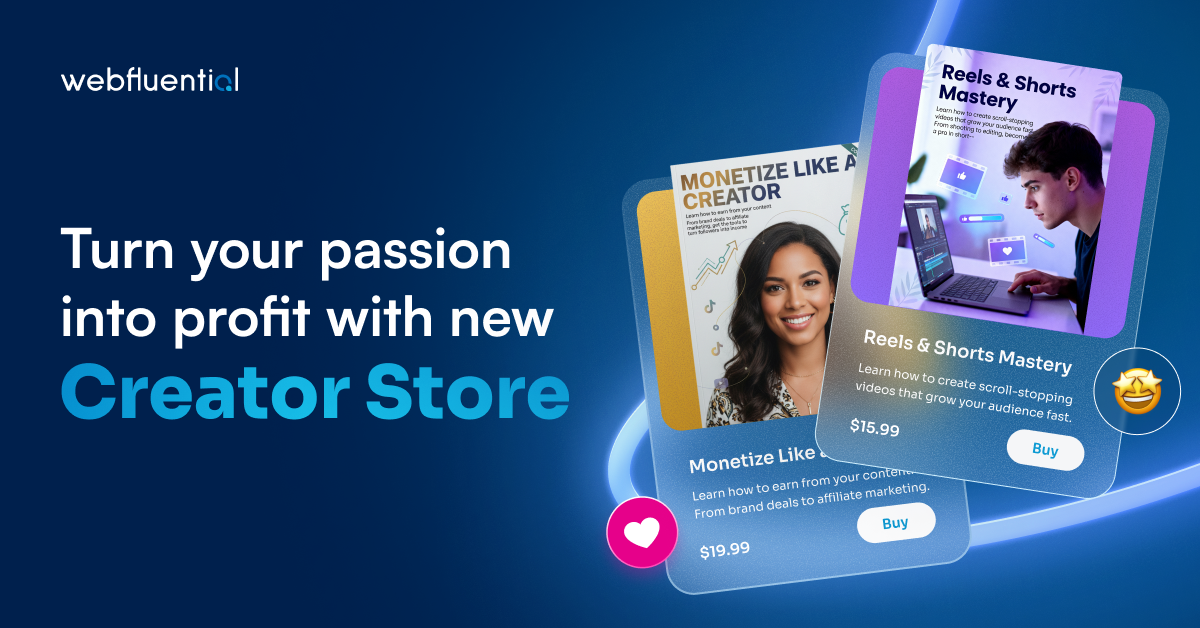
Here’s where the big news is: we’re launching our Creator Store, a platform built for creators like you to list, promote and sell your own products or promote others’ products in a creator-friendly environment.
Why this matters:
- You control your product or service (brand ownership).
- You directly keep a larger share of the profit.
- Builds long-term equity rather than one-time deals.Action step: Start thinking now about what you could list: digital assets, merchandise, premium content, collaborator products. We’ll provide the infrastructure; you provide the creativity and audience.
3. Build and engage your community
Stay consistent and hand in your content on time. Reliability builds credibility and that’s what gets you repeat bookings.- Jade Robertson, Just Jade Blog
Monetisation depends on connection. A big number of followers means nothing if they don’t care what you say or do.Here are strategies to deepen community:
- Post consistently and with purpose: Understand what your audience values and deliver content around it.
- Use live sessions, Q&As, behind-the-scenes: These drive engagement and trust.
- Encourage feedback and interaction: Ask your audience what they want next. Then deliver.
- Document your journey: Audiences often buy into the process, not just the finished product.
4. Optimise your content for monetisation
If you want to sell, you need to connect first. This is a space where personality is king.- Sergio Ines, What My Boyfriend Wore
It’s not enough to create content; you must create content with monetisation in mind.Consider these tactics:
- Always include a clear call-to-action (CTA): e.g., “Check the link in bio”, “Download the guide”, “Join the course”.
- Use analytics: Webfluential lets you see metrics from your channels and use these insights to learn and grow.
- Experiment with formats: Reels/Shorts, Stories, long-form videos, blogs. See what resonates.
- Repurpose content: One idea → multiple formats → multiple platforms. Increases reach.
- Track what converts: Which content leads to sales, sign-ups or affiliate clicks? Focus there.
5. Negotiate and set your rates
When brands approach you (or you approach them) you need to know what you’re worth.
- Determine baseline rates (per post, per story, per campaign).
- Factor in use rights, exclusivity, platform, production cost.
- Beware of undervaluing yourself: you’re providing access to an engaged audience and the power to influence behaviour (the so-called “persuasion economy”).
- Bundle services: e.g., a story + post + live session is more valuable than a single post.
- Always have a contract or agreement: scope, deliverables, timeline, payment.
6. Scale your business
Once you have one revenue stream working, scale it:
- Automate where possible (scheduling, analytics).
- Outsource production or editing so you focus on strategy and growth.
- Develop an evergreen product (a course that sells continuously).
- Leverage your Creator Store: once live, you’ll be able to list more items, test pricing, analyse what sells.
- Reinvest profits: Improving production value, collaborating with other creators, tapping new platforms.

7. Protect your brand and long-term future
Your reputation is your most valuable asset.
- Be transparent with your audience: declare sponsored content and affiliate links.
- Choose partnerships aligned with your values.
- Keep learning: the social-media landscape evolves rapidly (AI, new platforms, new formats). Webfluential’s blog emphasises how creator-economy tools and AI are changing the game.
- Preserve multiple revenue streams so you’re not dependent on one platform or one brand.
8. The roadmap: From today to revenue
Here’s a simple 4-step roadmap:
- Audit your current position: What niche are you in? What’s your engagement like? What opportunities are you currently missing?
- Choose at least two monetisation strategies: e.g., brand partnerships + digital product + Creator Store listing.
- Build assets: Create or refine your media kit, plan your digital product, sketch your Creator Store offering.
- Launch and test: Pitch your first brand, publish your first product, list on the Creator Store when live. Track results and iterate.
9. Why linking with Webfluential helps
Webfluential offers an ecosystem that supports creators at different stages.
Webfluential has helped bring consistency to my career. It’s made my workflow more stable and helped me build long-term client relationships.- Jade Robertson, Just Jade Blog
Key highlights:
- It allows you to build a professional Creator Page and quote brands quickly.
- It gives you analytics and performance insights to understand what drives your audience.
- It supports newer revenue models such as direct-to-audience sales and affiliate programmes - fields that will all mesh well with your Creator Store launch.
By combining the toolset of Webfluential with the upcoming Creator Store, you’re setting yourself up not just for “influencing” but for creating a business with assets, repeatable revenue and scale.
10. What are you waiting for?
If you're serious about turning your creativity into income, start today:
- Sign up for Webfluential (if you haven’t already) and connect your social channels so you can measure your value.
- Think through what you could sell via the upcoming Creator Store, whether it’s a digital course, merchandise, templates, filters, or something unique to your brand.
- Map your next three income streams and commit to launching one in the next 30 days.
- Keep measuring, iterating and scaling. Each campaign, each product, each post brings you closer to a sustainable creator business.
Your followers are waiting for your next move and your expertise has value. The tools are here. Let’s make your influence pay.
Join Webfluential and start growing your business
From micro enterprises to Fortune 500 companies, brands from over 130 countries have booked influencers on Webfluential.
Talk to our team